
The Whistlestop

The Whistlestop field guide · Horse country

Ardmore was built on ranch country.

The city's story begins on a Chickasaw Nation ranch and continues through working horse operations, a farrier school, and one of Oklahoma's busiest historic equine venues.

Founding landscape
700 Ranch · By 1879
Local craft
Horseshoeing school · Since 1975
Public events
Hardy Murphy · 48 weeks a year

Before Ardmore was a railroad town, it was ranch country. The railroad that created the townsite crossed the 700 Ranch in 1887.

The deeper story begins in the Chickasaw Nation, where native grass and reliable water supported cattle and horses. State preservation research identifies horse breeding and ranching as principal businesses among Chickasaw citizens before statehood. Texas cattle operations later paid to graze herds on Chickasaw land, and ranch stations spread across the region. Ardmore grew from that landscape rather than replacing it entirely.

The ranch beneath the city.

Ardmore did not expand beside the 700 Ranch. It expanded across it. The ranch, railroad, and cattle-loading station are the most useful starting points for understanding why the city formed here.

Chickasaw ranch country

Before statehood

The prairie and water of the Chickasaw Nation supported livestock long before Ardmore had streets. Chickasaw citizens raised horses and cattle, while a lease system gave non-citizen farmers and cattlemen access to land. After the Civil War, Texas herds also moved through and grazed in the region on the way north.

The 700 Ranch became the name most closely tied to Ardmore’s founding, but territorial-era accounts also identify the IS Ranch, Alva Roff’s ranch, and Treat McCoggin’s ranch among Carter County’s important pre-allotment operations.

Read the state’s Ardmore historic context and the Oklahoma Historical Society’s Carter County history.
The 700 Ranch

Established by 1879

The Roff brothers established the 700 Ranch where present-day Ardmore would develop. It began as a line station that helped control cattle movement and included a simple dogtrot log house used by cowboys and travelers. Alva Roff, who had married a Chickasaw citizen, continued the operation and pastured cattle for Texas owners as well as running his own herd.

Read the Oklahoma Historical Society’s 700 Ranch history

The railroad makes Ardmore

1887

When the Gulf, Colorado and Santa Fe laid tracks across the ranch in 1887, the new station became a place to load cattle and trade with surrounding farms and ranches. The settlement grew into Ardmore. In a literal sense, downtown and the railroad district occupy land once organized around the 700 Ranch.

Where to see the story

35 Sunset Drive · Free admission

A replica of the 700 Ranch dogtrot house stands at the Greater Southwest Historical Museum. The museum preserves Ardmore and Carter County history, including the agricultural tools and working life that put the ranch in context. It is generally open Tuesday through Saturday, 10 a.m. to 5 p.m.; confirm before visiting.

Plan a Greater Southwest Historical Museum visit

The horseman behind the name

Hardy Murphy and Buck.

Ardmore native Hardy Murphy was born in 1903, the grandson of a Texas horse trader. He became an internationally known horse trainer and rodeo showman in the 1930s and 1940s, staging horseback interpretations of Western paintings and sculptures with horses including Buck, Silver Cloud, and Thor.

Murphy and Buck performed for major audiences and the Royal Court in London and appeared on the cover of The New Yorker in 1944. Murphy returned to Ardmore, where the Municipal Exhibition Building was renamed for him in the 1960s. Buck was buried on the coliseum grounds after retiring at the Fort Worth stock show in 1953.

Read the official Hardy Murphy history or open our practical visitor guide.

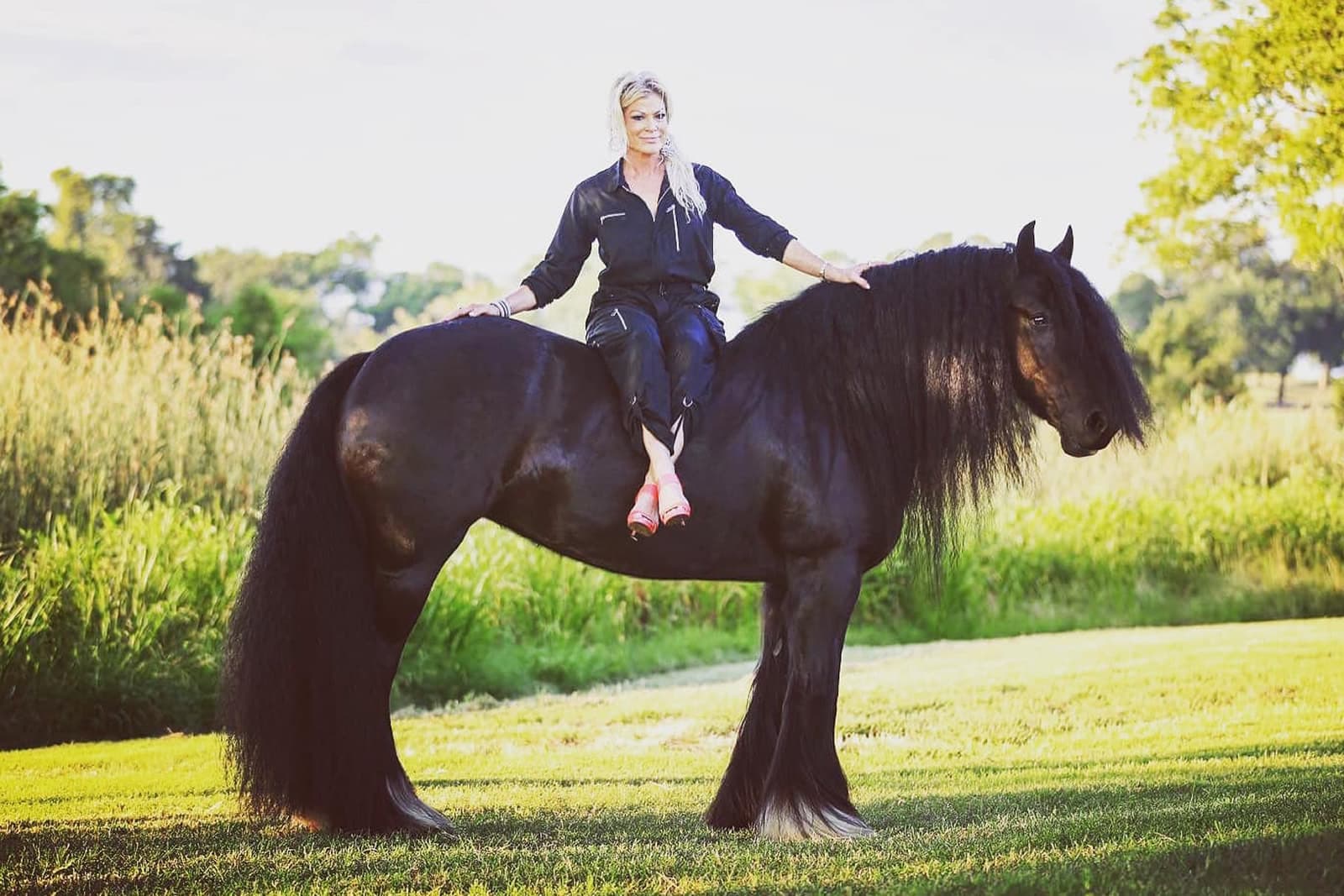
A black Gypsy Vanner horse at an Ardmore breeding stable

A working tradition

Horse country is still active.

Today’s Ardmore horse community spans working cow horses, cutting, roping, reining, stock-horse competition, Welsh ponies, and Gypsy Vanners. Many ranches and training barns are private workplaces, so admire them through their events and published programs unless an owner explicitly invites visitors.

Photo and Gypsy Vanner program: Samantha’s Vanner Stables

Horse operations to know by name.

These examples show the range of Ardmore’s present-day horse industry. They are not a list of public attractions: use the official pages for advertised shows, clinics, horses for sale, or contact information.

Johnson Performance Horses

638 Valley Ranch Road

JPH trains horses and riders across Western and English disciplines. Its Ardmore facility is especially visible through stock-horse shows that can include ranch riding, cutting, working cow horse, reining, roping, trail, and conformation. The Oklahoma Quarter Horse Association also lists sanctioned events at the property.

She’s The One Ranch

Ardmore breeding program

She’s The One Ranch breeds AQHA and APHA performance horses for working cow horse, roping, and cutting. Its program centers on proven mares, pedigrees, foal crops, and horses intended for regional and national competition—the modern performance-horse end of Ardmore’s ranch tradition.

Samantha’s Vanner Stables

Ardmore Rod & Gun Club property

On 170 acres in the Arbuckle foothills, this breeding program raises and shows Gypsy Vanners rather than the cow-horse breeds most associated with the arena. The property traces its own history to the Ardmore Rod & Gun Club, founded in 1906, and demonstrates how varied the local horse community has become.

Yes—there is a horseshoeing school nearby.

Oklahoma State Horseshoeing School is three miles east of Ardmore. It is a working vocational school and farrier facility, not a staged heritage exhibit.

Training farriers since 1975

4802 Dogwood Road

The school’s 7,100-square-foot campus includes classrooms, a forge and shoeing area, a welding shop, supply shop, and student bunkhouse. Its location makes sense: the surrounding horse industry supplies both the need for farriers and the live-animal experience required to teach the trade.

What students learn

Six weeks · 300 clock hours

The current basic program combines hoof anatomy and conformation with daily trimming or shoeing, hot and cold shoeing, handmade and corrective shoes, forge work, field work, and the practical steps involved in running a farrier business. The school schedules six class sessions a year.

Before you go

Call 580-223-0064

Because this is an active school and shoeing facility, do not assume walk-in tours are available. Contact the school if you are interested in the program, its horseshoeing services, the supply shop, or whether a visit can be arranged.

Visit Oklahoma State Horseshoeing School

More than one rodeo arena

What happens at the Hardy Murphy grounds.

Hardy Murphy is a 36-acre equine and event complex, not just the historic building visible from Lake Murray Drive. The grounds hold four arenas and more than 600 stalls. The climate-controlled main coliseum seats up to 4,000; three additional covered arenas allow warm-ups, smaller shows, or simultaneous activity.

Barns, wash bays, showers, RV hookups, concessions, and 18,000 square feet of wing space support events that may last a day or more than a week. That infrastructure is why a cutting or reining show can bring horses, riders, trainers, vendors, and spectators into one working temporary community.

The current calendar includes cutting horse shows, team roping, barrel racing, reining, rodeo, stock-horse activity, and the Carter County Free Fair, alongside occasional dog shows, carnivals, trade events, go-karts, and monster trucks.

Check the official Hardy Murphy event calendar and use our spectator planning guide.

What you are watching in the arena.

The event names can sound interchangeable to a first-time spectator. They test different partnerships between horse, rider, speed, cattle sense, and precision.

Cutting

Horse and rider separate one cow from a herd, then the horse works largely on its own to keep that cow from returning. Watch the horse mirror the cow’s movement: quick stops, low turns, and the instinct riders call “cow sense.”

Reining

Reining is a set pattern of large and small circles, lead changes, spins, rollbacks, and sliding stops. The goal is controlled athleticism: difficult maneuvers should look willing, balanced, and nearly effortless.

Roping and rodeo

Team roping pairs a header and heeler against the clock, while a full rodeo may combine several timed and rough-stock events. Read the event listing carefully: a weekend labeled “roping” is not necessarily a complete rodeo performance.

Barrel racing

A horse and rider run a cloverleaf pattern around three barrels. The fastest clean time wins, so the decisive moments are not only the sprints but the tight, efficient turns that preserve momentum without knocking a barrel.

Ranch and stock horse

Versatility and stock-horse programs can combine ranch riding, trail, reining, cutting, cow work, roping, and conformation. The broader test asks whether one horse is useful, responsive, and capable across the jobs of ranch life.

Where to stay

Trade the event hotel corridor for Main Street.

The Whistlestop is a collection of six lofts in a restored early-1900s building at 13 E Main Street. Hardy Murphy Coliseum and Oklahoma State Horseshoeing School are short drives; downtown Ardmore restaurants, bars, boutiques, Depot Park, and Amtrak are walks from the front door.

Check dates across all six lofts

Ardmore horse country FAQs

The useful answers, in one place.

Why is Ardmore, Oklahoma associated with horses and ranching?

Ardmore developed in Chickasaw ranch country. Horse breeding and ranching were important businesses in the region before statehood, and the townsite formed after the Santa Fe railroad crossed the Roff brothers' 700 Ranch in 1887. Working ranches, horse trainers, farriers, and equine competition remain part of the local economy and culture.

What was the 700 Ranch in Ardmore?

The 700 Ranch was a Chickasaw Nation cattle ranch established by the Roff brothers by 1879 in the area where Ardmore later developed. It served as a line station and grazing operation. A replica of its dogtrot ranch house is displayed at the Greater Southwest Historical Museum in Ardmore.

Can visitors tour horse ranches around Ardmore?

Most Ardmore-area breeding and training operations are private working properties, not drop-in attractions. Visit an advertised show, clinic, sale, or open event, or contact the ranch directly before making plans. Hardy Murphy Coliseum is the most dependable place for the public to experience Ardmore's horse culture.

Is there a horseshoeing school near Ardmore?

Yes. Oklahoma State Horseshoeing School is at 4802 Dogwood Road, about three miles east of Ardmore. Established in 1975, it teaches a six-week, 300-hour horseshoeing and blacksmithing program and operates a forge, shoeing area, welding shop, and supply shop. Contact the school before attempting to visit.

What horse events happen at Hardy Murphy Coliseum?

The calendar commonly includes cutting horse shows, team roping, barrel racing, reining, ranch and stock horse competitions, rodeos, and youth or livestock events. The 36-acre grounds can also host county fairs, dog shows, carnivals, trade shows, and motorsport entertainment.

Where should you stay for Hardy Murphy Coliseum or an Ardmore horse event?

The Whistlestop offers six historic lofts at 13 E Main Street in downtown Ardmore. Hardy Murphy Coliseum is a short drive away, while downtown breakfast, restaurants, bars, shops, Depot Park, and Amtrak are walkable from the property.

Research note: this guide was fact-checked against the Oklahoma Historical Society, Oklahoma State Historic Preservation Office surveys, Greater Southwest Historical Museum, Hardy Murphy Coliseum, Oklahoma State Horseshoeing School, and the official ranch and training-operation pages linked above. Event calendars and private-business access can change; confirm before traveling.

Horse country outside, Main Street at home

Stay close to the grounds.
Come home to downtown.

The Whistlestop puts Hardy Murphy and the ranch roads a short drive away, with downtown Ardmore's meals, shops, and drinks waiting on foot afterward.

Check availability Explore Ardmore